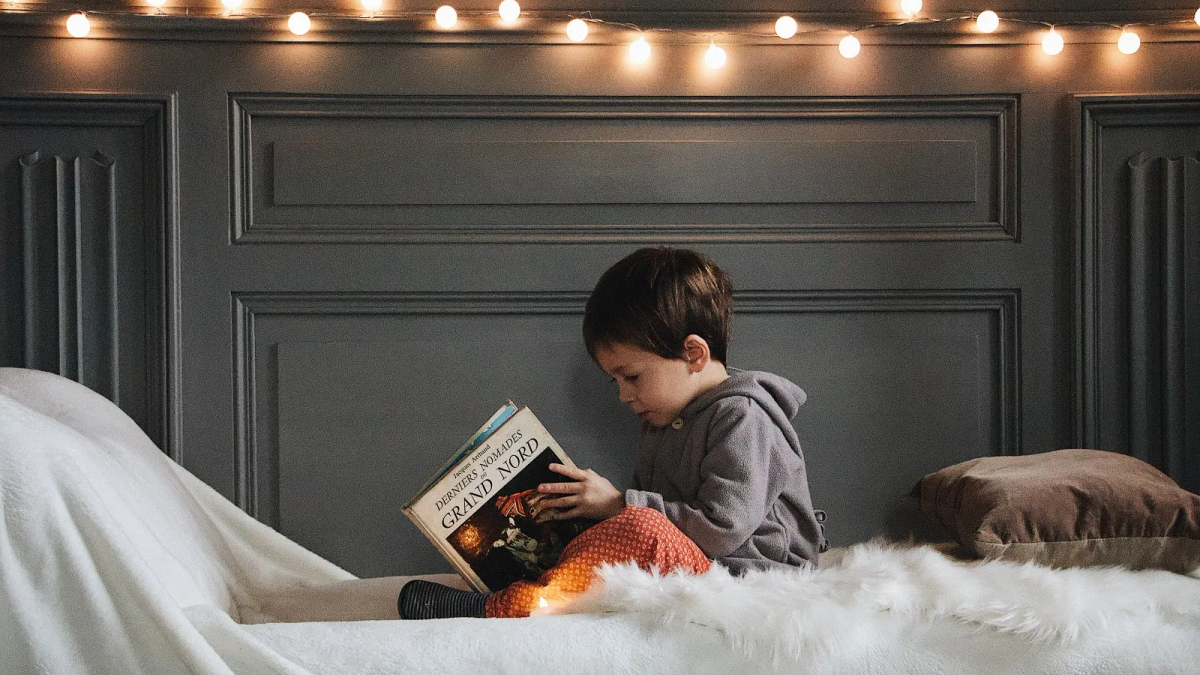
Reading to a child at bedtime does two things at once: it signals that the day is winding down, and it offers a moment of closeness that does not ask anything of either of you.
A bedtime routine is a repeated sequence of calming activities in the evening that helps a child’s body and mind recognize that sleep is approaching. Stories fit naturally into that sequence because they are familiar, low-stimulation, and create a gentle transition from the active part of the day.
That combination — rhythm, warmth, and lowered stimulation — is why bedtime reading continues to matter even when children are old enough to read alone. The shared attention is part of what makes it work.
Stories help bedtime feel predictable
Children usually settle better when evenings follow a familiar shape.
Bath, pajamas, toothbrushing, a story, lights out. That kind of sequence is comforting because it removes guesswork. The body starts to learn what comes next.
A story can become the softest part of that routine, especially when it replaces brighter, noisier evening habits.
Reading together supports more than sleep
Bedtime reading can also nurture:
- listening and language skills
- imagination
- memory
- emotional connection
- a positive relationship with books
Language acquisition is the process through which children develop their ability to understand and use language, and it is supported significantly by hearing stories read aloud. Those benefits build over time, but the immediate value is simple: reading together slows the room down.
It gives children something calmer to look forward to
Many children resist bedtime because it can feel abrupt. They are still energized, still playing, or still attached to screens and stimulation.
Stories change the mood.
Instead of bedtime being only about stopping, it becomes about settling into something warm and familiar. That shift can make the whole evening smoother.
If you are trying to reduce the pull of devices before bed, gentler screen boundaries can support that transition too.
The connection matters
One of the loveliest parts of bedtime stories is that they create closeness without pressure.
You are not asking a child to perform or explain much. You are simply sitting together, sharing attention, and giving the day a softer ending.
Co-regulation is the process through which a calm, attentive adult helps a child’s nervous system settle by modelling steadiness and providing reassurance. Reading together is a natural form of co-regulation. That kind of regular connection can be deeply grounding, especially on busy days.
A comfortable setup helps
The physical environment matters more than most people think.
Reading time tends to go better when the room feels:
- calm
- softly lit
- comfortably warm
- not full of distractions
You do not need a perfect nursery or a styled reading corner. A comfortable bed, a small shelf of books, and lighting that does not feel harsh are usually enough.
Keep it simple and enjoyable
You do not need to perform like a stage actor for story time to count.
Still, a few small touches can help:
- let your child choose between two books
- vary your voice a little
- pause to notice a picture together
- keep the pace slow rather than excited
The aim is not maximum entertainment. It is a sense of ease.
Physical books still have a place
Digital books can be useful at times, but physical books are often a better fit for bedtime. They remove bright screen light from the ritual and make the whole moment feel less like ordinary device time.
That softer boundary is part of what makes stories so effective in the evening.
For adults, bedtime reading can help too. If you enjoy the ritual yourself, reading before sleep has benefits beyond childhood.
A small ritual with a long reach
Not every family can manage a long bedtime routine every night, and that is okay.
Even a short story can help anchor the evening. It says: we are slowing down now, we are together for a moment, and sleep is getting closer.
That is a lovely gift to give a child, and a gentle one to give yourself too. For a fuller look at how to support good sleep at any age, our complete guide to better sleep covers the wider picture.
Sources
Frequently Asked Questions
At what age should you stop reading bedtime stories to children?
There is no set age. Many children enjoy being read to well into primary school and beyond, especially when the stories are age-appropriate. The ritual can adapt as children grow — reading together becomes shared reading, or a child reads aloud while a parent listens. The connection matters more than the format.
Do bedtime stories actually help children sleep better?
They can. A regular, predictable bedtime story becomes a signal to the body and mind that sleep is close. The quiet, low-stimulation nature of reading replaces brighter, noisier activities and helps children shift from active mode to rest mode more smoothly.
Is it better to read physical books or use an e-reader at bedtime?
Physical books tend to be a better fit at bedtime. They remove the bright screen light that e-readers and tablets produce, and the act of turning pages feels different — less like regular screen time, more like something calm and purposeful. The lack of notifications or other app distractions also helps the moment feel contained.
What if I do not have time for a full story every night?
Even a few pages count. A short consistent ritual is more valuable than an occasional long one. If time is tight, choose a picture book or a chapter from a longer story that naturally ends at a comfortable pause point. The child’s experience of predictability matters more than the length of the reading.
Enjoyed this? Get more like it.
Calm sleep guidance, straight to your inbox.
Sleep tips, straight to your inbox.
Calm, practical sleep guidance — we'll be in touch when we have something worth sharing.

Sheepherd is the editorial voice of The Sleepy Company. Sleep research and calmer habit guidance — written without hype, medical claims, or pressure.