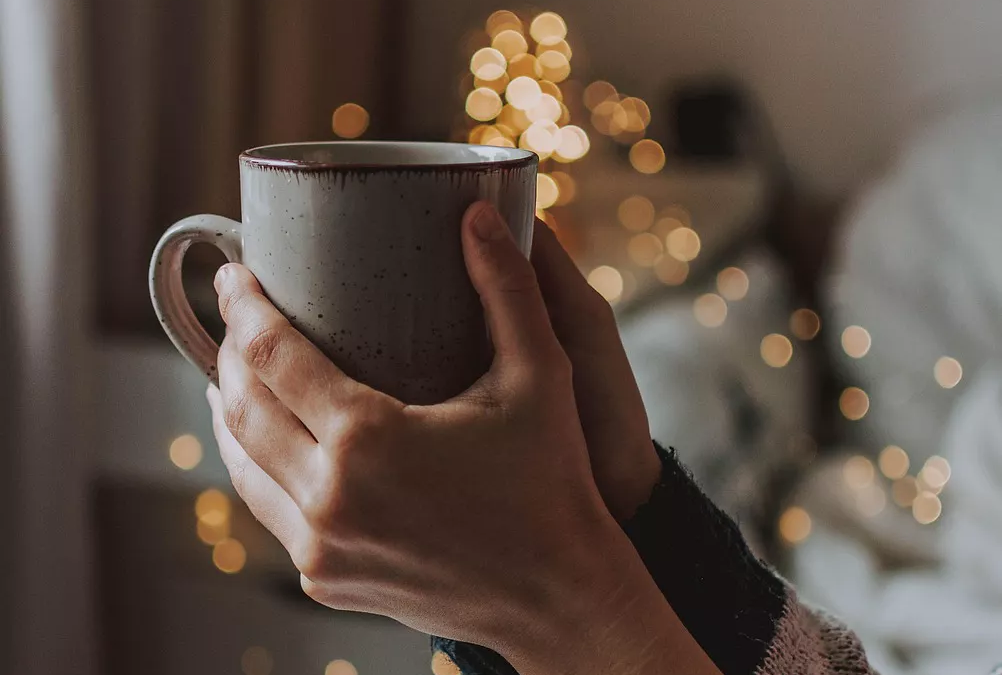
Both tea and coffee can fit into a sleep-friendly routine when you choose the right timing. The key difference is caffeine content and how long it stays in your system — coffee tends to linger for six or more hours, while many teas offer a gentler lift that fades more quickly.
Caffeine is a stimulant found in both tea and coffee that temporarily blocks adenosine, the brain chemical responsible for making you feel sleepy. When caffeine wears off, sleepiness returns — sometimes in a rush. Adenosine is a chemical that builds up throughout the day and creates the gradual feeling of tiredness that makes sleep feel welcome. A herbal tea is any drink brewed from plants, flowers, or herbs rather than the tea plant itself — and unlike green, black, or oolong tea, it contains no caffeine at all.
If evenings have been feeling wired or bedtime has started drifting later, your drink habits may be a useful place to look.
Tea is often the gentler option
For many people, tea feels easier on the body than coffee.
That can show up as:
- less acidity
- a softer caffeine lift
- fewer jitters
- an easier transition into the rest of the day
Some teas can also feel naturally calming, which is one reason they work well later in the day when coffee no longer does.
Coffee is usually stronger and more alerting
Coffee tends to contain more caffeine per serving, which can be useful earlier in the day if you want a clearer wake-up signal.
That same strength can become a problem later on, especially if:
- you are sensitive to caffeine
- you drink it in the afternoon
- you are already stressed or overstimulated
- your sleep onset has been getting slower
What helps you feel functional at 3 p.m. can quietly make it harder to feel sleepy at 10 p.m.
Timing matters as much as the drink itself
For sleep, the biggest issue is often not tea versus coffee in general. It is when you drink them.
If you are trying to protect your evenings, it helps to:
- keep stronger caffeinated drinks earlier in the day
- experiment with cutting caffeine sooner than you think you need to
- switch to herbal or low-caffeine tea later on
If bedtime has been difficult lately, falling asleep more easily sometimes starts with one earlier final cup.
Add-ins count too
Sugar-heavy drinks, syrups, and oversized specialty coffees can create their own energy roller coaster.
Even if the caffeine itself is manageable, a very sweet afternoon drink may leave you feeling:
- briefly energized
- then drained
- then tempted to reach for more stimulation later
The more straightforward the drink, the easier it usually is to notice how it truly affects you.
A practical way to choose
If you are deciding between tea and coffee with sleep in mind, try asking:
- Which one leaves me feeling steadier?
- Which one is easier to stop earlier?
- Which one tends to stay in my system too long?
- Which one feels best with the kind of evenings I want?
The answer may be different for different people.
You do not need to give up both
This is rarely about total restriction.
Coffee may fit best in the morning. Tea may fit better later on. Herbal teas may work well once you are fully in wind-down mode.
The goal is not to eliminate pleasure from your routine. It is to choose drinks that support the rhythm you want instead of working against it. For a broader look at everything that affects sleep — including timing, light, environment, and more — our complete guide to better sleep covers it all.
Sources
Frequently Asked Questions
Does coffee affect sleep more than tea?
Coffee typically contains more caffeine per cup and its effects can last longer, making it more likely to interfere with sleep when consumed in the afternoon. Most standard teas contain less caffeine, and herbal teas contain none.
What time should I stop drinking coffee before bed?
Most people benefit from stopping caffeinated drinks at least six hours before bed, though some individuals are more sensitive and may need to cut off by early to mid afternoon. If sleep onset has been slow lately, experimenting with an earlier final cup is a simple place to start.
Is herbal tea OK to drink at night?
Yes — herbal teas like chamomile, peppermint, and rooibos contain no caffeine and are generally safe to drink in the evening. They can be a gentle part of a wind-down routine.
Does all tea contain caffeine?
Traditional teas — including green, black, white, and oolong — all contain caffeine, though usually less than coffee. The amount depends on the type and how long it is steeped. Herbal teas made from plants rather than tea leaves are usually caffeine-free.
Can I drink coffee and still sleep well?
Many people drink coffee daily without significant sleep disruption. The main factor is timing. Keeping caffeinated drinks to the morning and early afternoon is usually enough to avoid it becoming a problem.
What is the gentlest caffeinated drink for evenings?
Green tea is generally one of the lower-caffeine options among traditional teas, and its slower-releasing lift makes it easier for many people to tolerate later than coffee. Still, if evenings are already feeling difficult to wind down, switching to a fully caffeine-free herbal tea is the simplest choice.
Enjoyed this? Get more like it.
Calm sleep guidance, straight to your inbox.
Sleep tips, straight to your inbox.
Calm, practical sleep guidance — we'll be in touch when we have something worth sharing.

Sheepherd is the editorial voice of The Sleepy Company. Sleep research and calmer habit guidance — written without hype, medical claims, or pressure.