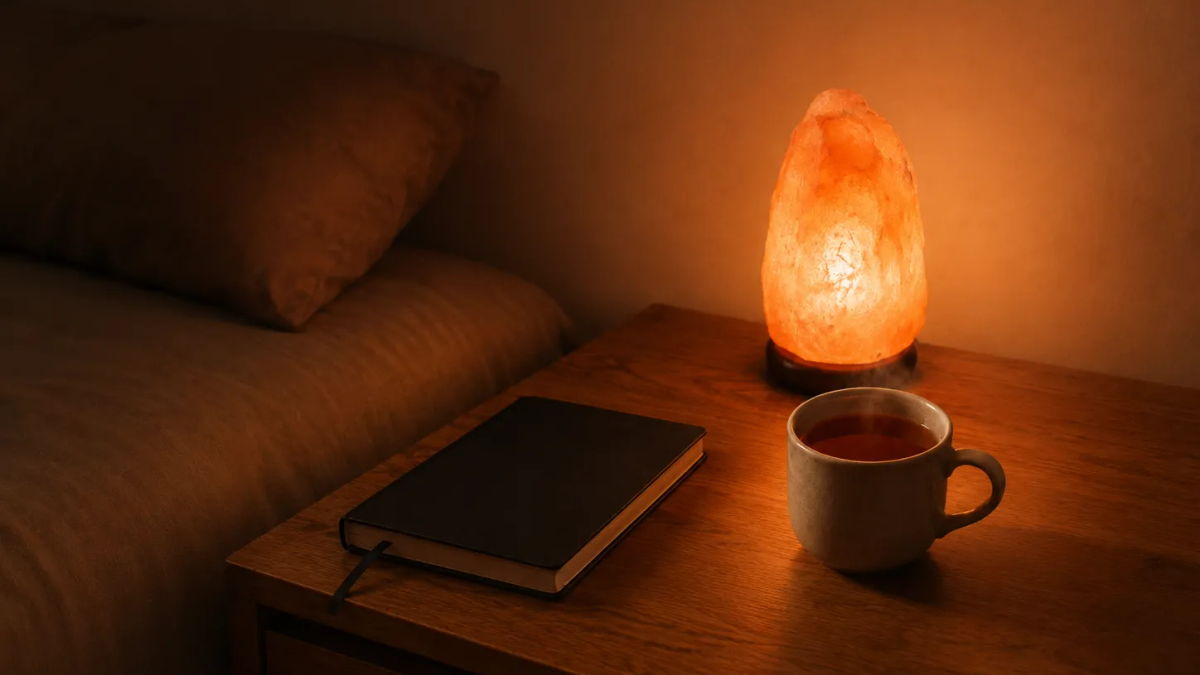
Building healthier evening habits does not require a dramatic overhaul of your life. The things that make the biggest difference tend to be small, consistent, and kind — spending a few minutes outside during the day, lowering the pace after dinner, or simply choosing to do a little less once the sun goes down.
An evening habit is any repeated behaviour in the hours before bed that shapes how you feel as the day closes. The right ones do not need to be elaborate. They just need to fit your life well enough that you actually keep doing them.
This is the guide that brings it all together. Each section below focuses on one part of a calmer evening — and links to a deeper post if you want to explore that area further.
How managing your emotions in the evening shapes your health
Emotional regulation is the ability to notice, process, and respond to feelings without being overwhelmed by them. In the evenings, this matters more than most people realise. The way you handle frustration, worry, or low mood in the hours before bed has a direct effect on how easily you wind down — and how rested you feel the next day.
When emotions go unacknowledged, they tend to linger. A difficult conversation, a stressful email, or a general sense of dread about tomorrow can sit in the background all evening, keeping your nervous system quietly activated. That activation makes it harder to relax, harder to fall asleep, and harder to feel genuinely restored when morning comes.
The good news is that emotional regulation is a skill, and small evening practices can meaningfully strengthen it. Journalling for a few minutes, naming what you are feeling, or simply giving yourself permission to sit with an uncomfortable emotion rather than push it away — these are not dramatic interventions. They are quiet tools that build up over time.
Some approaches worth exploring:
- Name the emotion, do not suppress it. Identifying what you feel (“I’m anxious about tomorrow”) takes the edge off it.
- Limit stressful inputs in the evening — news, difficult conversations, and draining social media can wait until morning.
- Give yourself a short transition between work and the rest of your evening. Even ten minutes of quiet movement or reading can act as a reset.
Explore practical strategies for steadying your emotions during stressful times.
Why time outside during the day supports calmer evenings
Daylight exposure is one of the most underrated factors in how your evenings feel. Your body uses natural light as its primary signal for regulating the internal clock that governs energy, mood, and the timing of your sleep drive. Without enough of it during the day, that clock drifts — and your evenings can feel restless or unsettled for reasons that seem hard to pin down.
Circadian rhythm is your body’s roughly twenty-four-hour internal cycle, coordinated primarily by light and darkness. When you spend time outside in natural light — especially in the morning or early afternoon — you reinforce that cycle. Your brain gets a clearer signal about when daytime is and, by extension, when evening should begin. That clarity tends to make the transition into a calmer evening feel more natural.
You do not need to spend hours outdoors. Research suggests that even twenty to thirty minutes of natural light during the day can make a noticeable difference to mood and evening energy. A short walk after lunch, a few minutes in the garden, or simply choosing to eat near a window all count.
The mood benefits of time outside compound over days and weeks. People who build even modest outdoor time into their routine often find that their evenings feel a little lighter — less wired, less sluggish, more ready to rest.
Read more about how time outside can support a calmer mood and better daily rhythm.
The quiet power of doing less in the evening
One of the most effective evening habits is also one of the easiest to overlook: doing less. Modern evenings tend to be packed. Chores, messages, screens, social plans, productivity tasks that spilled over from the day. The default is busyness, and it leaves the nervous system nowhere to land.
Quiet time is a period of low-demand activity — or deliberate stillness — that allows the body and mind to decelerate naturally. It is not about doing nothing. It is about choosing activities that do not require much from you: sitting with a cup of tea, reading something gentle, listening to music with no agenda, watching the light change outside.
The value of quiet time in the evening is partly physiological. Stress hormones like cortisol naturally decline in the hours before bed as part of a healthy daily cycle. Busyness interrupts that decline. Rest supports it. The more space you give your body to follow that natural curve, the easier the transition into sleep tends to be.
A few small ways to introduce more quiet into your evenings:
- Pick a time — even 8 p.m. — after which you stop starting new tasks.
- Keep one corner of your home free from screens and work-related things.
- Let “doing nothing” feel like enough. It is.
Discover how to make more room for quiet time in your evenings.
How to reset gently after a stressful day
Some days are harder than others. You arrive at the evening carrying a weight that does not simply lift the moment work ends. A difficult meeting, a frustrating commute, a sense that you got little right today — these things follow you, and pretending they did not happen rarely helps.
A gentle evening reset is a short, intentional sequence of actions designed to help you transition out of a stressful day without forcing the feeling away. The key word is gentle. This is not about pushing yourself to relax through sheer willpower. It is about giving your system permission to start letting go.
What a reset looks like will vary from person to person. For some it is a warm shower and a change of clothes — a physical signal that the day is over. For others it is a short walk, a few stretches, or sitting down with something warm and non-demanding. The ritual itself matters less than the consistency of it.
A few principles that tend to help:
- Keep it short. Ten to fifteen minutes is enough to shift your state.
- Make it sensory. Warmth, scent, soft light, and comfortable textures signal safety to the nervous system.
- Avoid problem-solving. Save that for the morning when your capacity is higher.
Read a gentle evening reset guide for stressful or overwhelming days.
Why a kinder mindset makes evenings feel lighter
The way you talk to yourself in the evening matters. For many people, the end of the day is when self-criticism tends to peak. You review what you did not finish, what you said wrong, what you should have done differently. That kind of internal commentary is not neutral — it keeps the mind active and the mood low.
Self-compassion is the practice of treating yourself with the same care and understanding you would offer a good friend who was struggling. It is not about lowering your standards or ignoring mistakes. It is about recognising that you are human, that imperfect days are normal, and that being harsh with yourself at ten o’clock at night rarely improves tomorrow.
A kinder evening mindset does not require grand acts of self-love. It can be as simple as noticing when you are being hard on yourself and choosing to soften slightly. Acknowledging one thing that went reasonably well. Deciding that what did not happen today can wait until tomorrow without the added weight of guilt.
Over time, this quieter shift in tone can make evenings feel considerably less heavy — not because life becomes easier, but because you stop making it harder.
Explore how a kinder mindset may make your evenings feel less heavy.
How aromatherapy can support a calmer evening
Aromatherapy is the use of plant-derived essential oils to influence mood, stress, or physical comfort through the sense of smell. In an evening context, it is less a treatment and more a gentle environmental cue — one that signals to your brain that it is time to slow down.
The most commonly used oils for evening calm are lavender, chamomile, sandalwood, and bergamot. Lavender in particular has a reasonable body of research behind it, with studies suggesting it may help lower perceived anxiety and support a sense of relaxation in some people. The effects are subtle rather than dramatic, which is the right expectation to bring.
Aromatherapy works best when it is consistent. Using the same scent each evening over a period of weeks turns it into a conditioned cue — your nervous system begins to associate that smell with rest, which amplifies the calming effect over time.
Simple ways to use scent in your evening:
- A diffuser with a few drops of lavender oil about thirty minutes before you want to wind down.
- A roll-on oil applied to your wrists or temples as part of a short bedtime ritual.
- Scented bath salts or a warm shower with an aromatherapy shower mist.
Read more about how aromatherapy may support a calmer, more restful evening.
Using music to set the right tone for your night
Sound shapes mood more quickly and reliably than almost any other sensory input. The music or sounds you choose in the evening can either amplify stimulation or help bring it down — and most people do not think deliberately about which they are doing.
A wind-down playlist is a curated selection of slower, lower-tempo music used intentionally in the hours before bed. It is not about listening to the “right” genre — it is about choosing music that your nervous system responds to with a feeling of ease rather than alertness. For many people that means slower tempos, familiar melodies, and minimal lyrics. For others it means ambient sounds, classical pieces, or soft acoustic arrangements.
The tempo of music has a measurable effect on heart rate and breathing over time. Slower music tends to pull both gradually downward, which supports the physical state you want to be in as bedtime approaches. This is not magic — but it is a gentle, pleasurable tool with almost no downside.
A few ideas:
- Create a dedicated evening playlist and start it at the same time each night.
- Keep the volume lower than you think you need — it signals calm rather than entertainment.
- Try instrumental tracks if lyrics tend to keep your mind engaged.
Discover how music may help set the right tone for your evening.
How to lift your energy in the evening without caffeine
There is a particular kind of low-grade exhaustion that arrives mid-evening — not quite sleepy enough to go to bed, but too drained to do anything enjoyable. The instinct to reach for caffeine is understandable, but it tends to create a cycle that makes the underlying problem worse.
Caffeine-free energy is the kind of alertness and engagement that comes from stimulating your body or mind in ways that do not interfere with your sleep drive later. It is gentler, more sustainable, and has the advantage of not requiring anything to wear off before you sleep.
The most reliable caffeine-free approaches tend to be physical or social. Light movement — a short walk, some gentle stretching, even dancing in the kitchen — raises circulation and shifts your mental state more effectively than most people expect. Brief social connection, doing something creative with your hands, or stepping outside for five minutes of fresh air can produce similar results.
Three approaches worth trying:
- A ten-minute walk after dinner. Movement accelerates digestion and gives your energy a natural second wind.
- Cold water on your face or a brief cool rinse. Temperature shifts are one of the fastest ways to change your alertness level.
- A short creative task — sketching, cooking something simple, or playing an instrument — that engages your attention without demanding effort.
Explore three simple ways to boost your evening energy without caffeine.
Frequently Asked Questions
How long does it take to build a new evening habit?
Most habits take between three and eight weeks of consistent repetition before they start to feel automatic. Starting with one small change — rather than a whole new routine — makes it considerably easier to stick with. Give yourself time, and expect some nights to go better than others.
Do I need a long wind-down routine for it to work?
No. A wind-down routine does not need to be long to be effective. Even fifteen to twenty minutes of low-stimulation activity before bed can help shift your body into a calmer state. The consistency of the routine matters more than its length.
What is the single most effective evening habit?
A consistent wind-down time — going through the same short sequence of calming actions at the same hour each evening — tends to produce the most reliable benefit over time. It works by creating a conditioned response: your brain and body learn to associate that sequence with rest, which makes the transition feel more natural.
Can evening habits help with anxiety at night?
Yes, and significantly so. Practices like limiting stressful inputs in the evening, giving yourself transition time, writing briefly about your worries, and using sensory cues like scent or soft music can all reduce the background activation that feeds night-time anxiety. None of these are treatments, but they are genuinely useful tools.
Where should I start if my evenings feel completely out of control?
Start with one thing. Choose the section above that resonates most — whether that is getting outside during the day, doing a short reset after work, or simply choosing to do less after a certain hour. One consistent change, repeated over several weeks, tends to create space for the next one. You do not need to fix everything at once.
Building healthier evening habits is not about becoming a different person. It is about making small, repeated choices that gradually shift how your evenings feel — a little quieter, a little kinder, a little more yours. If you are looking for a place to start, the how-to-sleep-better guide covers the broader picture and can help you find the area that will make the most difference for you right now.
Sources
Enjoyed this? Get more like it.
Calm sleep guidance, straight to your inbox.
Sleep tips, straight to your inbox.
Calm, practical sleep guidance — we'll be in touch when we have something worth sharing.

Sheepherd is the editorial voice of The Sleepy Company. Sleep research and calmer habit guidance — written without hype, medical claims, or pressure.