Time outside changes the texture of the day in ways that indoor environments cannot replicate. Natural light, open air, and a wider field of view all give the nervous system something different to process — something that tends to lower rather than raise its baseline of alertness.
The circadian rhythm is the body’s internal clock, roughly 24 hours long, that regulates sleep, wakefulness, hormone release, and mood — and it is calibrated primarily by natural light exposure. When most of the day happens indoors under artificial lighting, that calibration can drift, making it harder to feel genuinely alert during the day and genuinely sleepy at night. Melatonin is a hormone the body produces in response to darkness that helps signal the shift toward sleep — and consistent outdoor light exposure during the day supports a stronger, more timely melatonin rise in the evening.
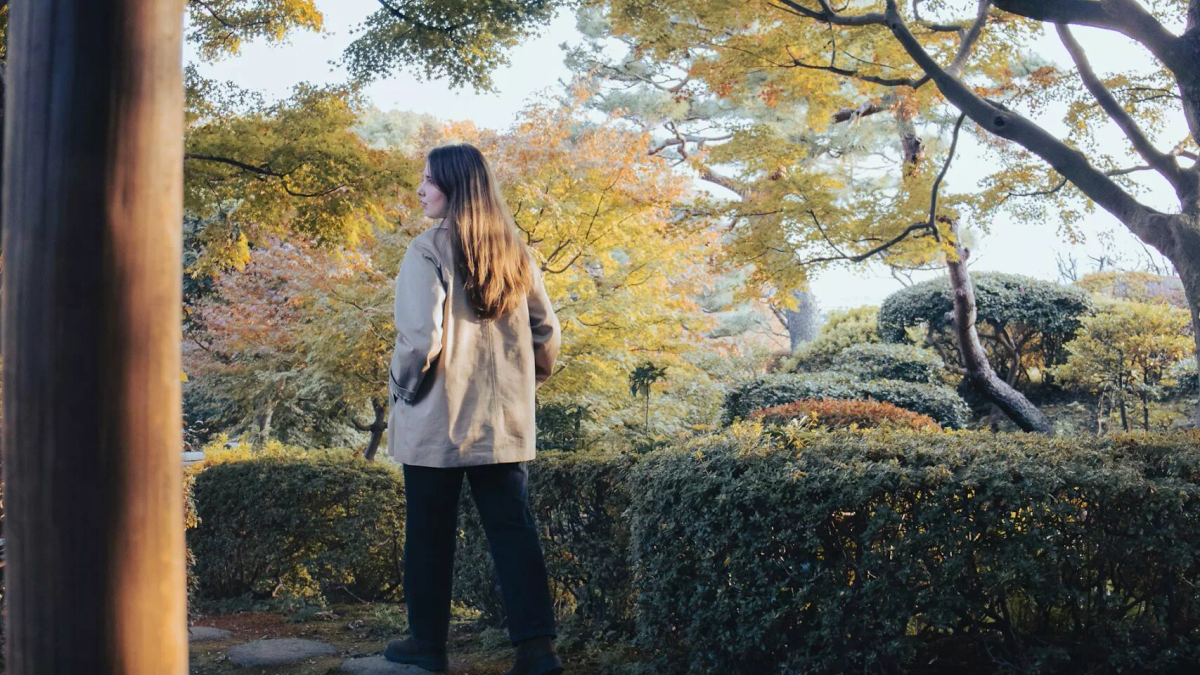
You do not need a dramatic outing for outside time to help. A short walk, a bench in a park, or ten minutes in a garden can be enough to shift the mood of the afternoon and make the evening feel easier to wind down into.
Outside time helps the nervous system reset
Nature does not solve everything, but it often changes the pace.
Even a short walk in a greener, quieter place can help you feel:
- less mentally crowded
- more physically awake
- less trapped in looping thoughts
- more connected to the time of day
That last part matters for sleep too. Natural light and time cues help your body understand when to feel more alert and when to start winding down later.
It can counter indoor fatigue
Long stretches indoors can create a dull, stale kind of tiredness.
You may not need more stimulation. You may need a different environment:
- fresh air
- daylight
- distance from devices
- a wider field of view than the walls around you
Sometimes the shift from inside to outside is enough to loosen the day’s tension.
Indoor fatigue is a low-grade depletion that builds when long periods indoors, under artificial light, without physical movement or natural air, leave the body feeling dull rather than rested. It can also interrupt the feeling that every hour is blending into the next. Even a short change of scene can bring back a little mental perspective.
Nature helps the day feel more like a day
When most of life happens indoors, it becomes easier to lose contact with basic rhythm cues.
Morning, afternoon, and evening can start to feel visually similar, especially when artificial light and screens dominate the whole schedule. Time outside helps restore contrast.
That can support:
- feeling more awake earlier in the day
- building a stronger sense of physical routine
- reducing the “stuck indoors” feeling
- arriving at evening with a clearer sense that the active part of the day is ending
This does not mean outside time is a cure for every sleep issue. It does mean it often supports the wider conditions that help rest feel more natural.
It does not have to be extreme
Nature time can be very ordinary:
- a walk through a nearby park
- sitting on a bench under trees
- tending to a small garden
- taking a slower route home
- stepping onto a balcony or into a yard for ten quiet minutes
What matters is that it gives your mind something other than constant input to process.
The simpler it is, the easier it is to repeat.
Outside time can soften emotional carryover
Sometimes the value of going outside is not really about exercise. It is about transition.
If you leave work, family tension, errands, or digital overload and go straight into the house without any pause, the day tends to keep clinging to you. A little time outside can help create a buffer between one mode and the next.
That is especially useful when:
- your mind feels sticky after work
- you have been looking at screens for hours
- your body feels tired but not settled
- you need a low-pressure way to decompress
You are not trying to optimize the walk. You are giving the nervous system a different texture to move through.
Better days often support better nights
Sleep is shaped by more than bedtime.
What you do during the day affects how ready your body feels to rest later. More daylight, less digital saturation, and a little physical movement can all make evenings easier.
If you are trying to strengthen that rhythm, caffeine-free ways to lift daytime energy can support the same goal.
You may also notice that outside time makes it easier to want quieter things later, such as reading, stretching, or a dimmer evening routine.
Let it be restorative, not performative
You do not need to turn every outing into a wellness project.
No tracking, optimizing, or proving anything. Just go outside, notice what softens, and come back a little less crowded than you were before.
That is often enough.
If you want to carry some of that calm back indoors, quiet time without your phone can help the rest of the evening stay softer too. And if you would like to see how daytime habits like this fit into a fuller evening wind-down, our guide to healthier evening habits brings it all together.
Sources
Frequently Asked Questions
How much time outside do you need each day to support better sleep?
Even twenty to thirty minutes of natural light exposure during the day can help reinforce the body’s internal clock. Morning or midday light tends to have the strongest effect on sleep timing, but any outdoor time is more useful than none.
Does it matter what you do outside, or is any outdoor time helpful?
Any outdoor time helps. A slow walk, sitting on a bench, or pottering in a garden all provide natural light and a change of environment. You do not need vigorous exercise for the effect to be meaningful. The shift from indoor to outdoor air and light is itself part of what helps.
Can spending time outside help with stress?
Yes. Time in quieter, greener, or more open outdoor environments tends to reduce the perception of stress and lower physiological markers of tension. Even brief exposure to natural settings is associated with feeling less mentally crowded. It also creates a transition buffer between demanding tasks and rest time.
Why do I feel sluggish when I spend all day indoors?
Long periods indoors, often under artificial light and without much movement, create a kind of dull, flat tiredness that differs from genuine physical fatigue. The body loses its natural rhythm cues, energy feels even and low rather than rising and falling with the day. Getting outside, even briefly, tends to interrupt that feeling.
Is morning sunlight more important than afternoon sunlight for sleep?
Morning light is particularly important because it has the strongest effect on setting your body’s internal clock for the day. It signals to your system when to feel alert and when to begin winding down later. Afternoon light is still useful, but the earlier in the day you get natural light exposure, the more clearly the rest of the daily rhythm tends to follow.
Enjoyed this? Get more like it.
Calm sleep guidance, straight to your inbox.
Sleep tips, straight to your inbox.
Calm, practical sleep guidance — we'll be in touch when we have something worth sharing.

Sheepherd is the editorial voice of The Sleepy Company. Sleep research and calmer habit guidance — written without hype, medical claims, or pressure.