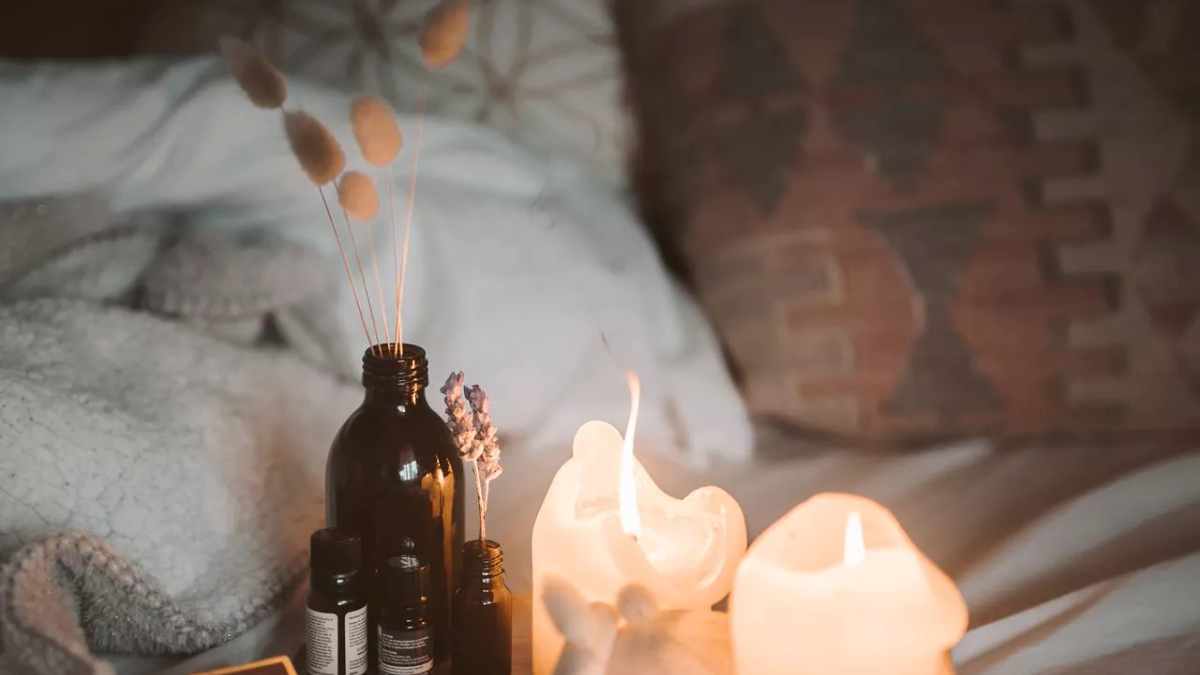
If you are deciding whether aromatherapy is worth trying before bed, lavender is the classic first oil to reach for, and simple beats elaborate. Start with one or two oils rather than a whole shelf, used sparingly — a diffuser for a short evening window, a room spray, or a pillow mist. Stronger is not better; if the scent dominates the room, it tends to feel more irritating than calming.
Aromatherapy is the use of natural plant extracts — most often in the form of essential oils — to create a particular atmosphere or sensory experience. In an evening context, it usually means diffusing or applying gentle scents that may help the body and mind begin to shift away from daytime alertness. An essential oil is a concentrated liquid containing the scent compounds of a plant, extracted through distillation or cold pressing. A diffuser is a device that disperses essential oil into the air as a fine mist, making it one of the most consistent and adjustable ways to bring scent into a room without applying anything directly to your skin.
Think of scent as atmosphere, not a miracle cure
Essential oils are often surrounded by dramatic claims. For a calmer sleep routine, it helps to keep the role of scent simpler than that.
Used gently, scent may help:
- make a room feel more restful
- signal the start of a bedtime routine
- reduce the harshness of a busy day
- create a more comforting environment
It does not need to fix everything to still feel worthwhile.
A few oils that tend to work well in the evening
Lavender
Lavender is the classic bedtime scent for a reason. Many people find it soothing, familiar, and easy to use in a diffuser or pillow spray, even though results vary from person to person.
Rose or geranium
These floral scents can feel soft and comforting, especially when evenings feel emotionally loud or tense.
Clary sage
Some people find clary sage grounding and relaxing in a diffuser blend, though scent preference is highly personal.
Gentle woodsy scents
Depending on your taste, certain pine-like or earthy scents can make a room feel settled and cocooned.
Scents that may fit better earlier in the day
Not every oil suits bedtime.
More energizing scents like peppermint, rosemary, lemon, and lemongrass may feel better in the morning or during work hours than right before sleep.
That does not make them bad. They are simply less aligned with the quieter tone many people want at night.
Keep use simple and careful
Whichever method you choose, keep it easy to maintain:
- a diffuser used for a short evening window
- a room spray
- a pillow mist
- a diluted blend used carefully and appropriately
Let scent support the wider environment
A diffuser can help, but scent works best when the room is already moving in the right direction.
It pairs well with:
- dimmer lighting
- fewer screens
- cooler air
- quieter sound
- a slower bedtime rhythm
If the bedroom still feels bright, noisy, or overstimulating, improving the environment itself will usually matter more than any oil.
A note of caution
Essential oils are not risk-free. Some can irritate skin, interact poorly with sensitivities, or simply feel unpleasant depending on the person.
If you use them:
- choose them carefully
- avoid overdoing it
- be mindful of pets, children, sensitivities, and enclosed spaces
The goal is comfort, not intensity.
A softer bedtime signal
One of the nicest things about aromatherapy is that it can become part of the ritual itself.
When you use the same calming scent in the evening often enough, it may begin to feel like a cue that the day is winding down.
That kind of cue can be small, but small cues are often what make bedtime feel easier over time. For more ways to shape a gentler end to the day, our guide to healthier evening habits covers a fuller range of ideas in one place.
Sources
- NCCIH: Aromatherapy
- NCCIH: Lavender: Usefulness and Safety
- NCCIH: Stress, Anxiety, and Sleep Problems: Considering Complementary Approaches
Frequently Asked Questions
What is the best essential oil to use before bed?
Lavender is the most widely used bedtime scent, and many people find it reliably calming. Chamomile and clary sage are also commonly chosen for their softer, more grounding quality in the evening. That said, scent is personal — the best oil is the one you find genuinely relaxing, not the most popular one.
How do you use essential oils safely for sleep?
The safest approach is to diffuse them at a low concentration for a limited time, rather than running a diffuser all night. Never apply undiluted essential oils directly to skin, and be mindful of pets, children, and anyone with respiratory sensitivities in your household. A little goes a long way.
Can aromatherapy actually help you sleep better?
Aromatherapy may help by creating a calmer sensory environment, which can make it easier for your body and mind to begin settling. The effect is most likely atmospheric rather than pharmaceutical — scent can signal that bedtime is approaching and make the room feel more restful, which is useful as part of a wider routine.
What scents should you avoid in the evening?
More energizing scents like peppermint, rosemary, eucalyptus, and citrus oils such as lemon or grapefruit are generally better suited to morning or daytime use. They tend to feel refreshing and alerting rather than softening, which works against the goal of a calmer evening.
Do you need a diffuser or are there simpler options?
A diffuser is the most consistent way to use essential oils in a room, but it is not the only option. A pillow mist, a few drops in a warm bath, or a room spray can achieve a similar effect with less equipment. Start with whatever feels easiest to maintain.
Enjoyed this? Get more like it.
Calm sleep guidance, straight to your inbox.
Sleep tips, straight to your inbox.
Calm, practical sleep guidance — we'll be in touch when we have something worth sharing.

Sheepherd is the editorial voice of The Sleepy Company. Sleep research and calmer habit guidance — written without hype, medical claims, or pressure.